Location :
Orlando, FL, USA
Location :
Orlando, FL, USA +1 (407) 714-1616
 info@biz4group.com
















Imagine a digital system that doesn’t wait for instructions but instead, understands your business goals, learns from real-time feedback, and takes independent actions to get the job done.
Read More

While comparing an AI development agency vs in-house AI team, most businesses are trying to answer three critical questions: Which option is more cost-effective? Which delivers faster results? And which creates better long-term ROI?
And answering this question is not easy anymore because AI development itself has become far more complex.
In 2026, AI adoption is accelerating across nearly every industry. Recent reports show that more than 75% of organizations are currently using AI in at least one business function, while the numbers for generative AI adoption have crossed 70% globally. Simultaneously, there are many enterprises struggling with implementation challenges, talent shortages, infrastructure costs, and scaling AI beyond pilot projects. A 2026 enterprise AI survey found that 79% of organizations still face significant challenges in AI adoption despite increasing investments.
This is where the discussion around AI outsourcing vs internal AI team becomes important.
Some companies choose to outsource AI development services speed up deployment and gain access to specialized expertise without the need to build a large internal department. Others focus on creating an internal AI team to retain long-term ownership, drive proprietary innovation and maintain greater operational control.
The challenge is that AI development is very different from traditional software development. Beyond coding, businesses also need to consider data readiness, AI model deployment, infrastructure, optimization, governance, and ongoing improvement.
That is why choosing between an AI consulting company vs in-house AI engineers is not just a hiring decision anymore. It is a strategic business decision that directly impacts speed, scalability, operational efficiency, and long-term growth.
To understand which approach fits your business better, it is important to first understand what an AI development company actually does and where it fits in the AI adoption journey.
An AI development company is a technology partner that helps organizations design, implement, and integrate AI-driven solutions tailored to their business operations or product goals. These companies commonly provide services such as agentic AI development, AI agent development, AI copilot development, AI development services, AI app development, chatbot development services, AI product development services, AI avatar development and generative AI development services.
Unlike traditional software providers, AI development companies focus on advanced technologies including machine learning, large language models (LLMs), computer vision, predictive analytics, and intelligent automation. Their teams typically consist of AI engineers, data scientists, solution architects, and MLOps specialists who collaborate to build scalable, production-ready AI systems.
Many businesses rely on outsourced AI development services to gain rapid access to specialized AI expertise as it avoids the time and expense of building an in-house AI team from scratch.
This approach is commonly used for:
Advanced AI initiatives such as generative AI, computer vision, predictive analytics, and AI agents development often demand niche technical expertise that many businesses may not have internally which makes external AI specialists a more practical choice.
Companies looking to launch AI solutions quickly often prefer outsourced AI development services to reduce delays associated with hiring, onboarding, and infrastructure setup.
While many businesses choose external AI partners for flexibility and faster execution, others prefer building internal AI capabilities for long-term strategic control.
Choosing between an AI agency and an in-house team should not feel like a high-stakes experiment. Let Biz4Group help you make the smarter move.
Talk to AI ExpertsAn in-house AI team is an internal department that is responsible for developing, managing, and scaling AI capabilities within an organization. These teams operate as part of the company’s long-term technology and business strategy, unlike outsourced AI development services.
A typical in-house AI team may include:
Their role extends beyond simply building an AI system. Internal AI teams are often responsible for aligning AI initiatives with business goals, managing proprietary data systems, enhancing AI performance over time, and driving organization-wide AI adoption.
Many businesses choose to build an internal AI team for enterprise environments when AI becomes a central part of their products, operations, or competitive strategy. This is particularly common in industries that depend heavily on proprietary data, complex workflows, or continuous AI optimization.
As AI adoption is maturing, many organizations are moving beyond experimental AI projects and treating AI as a core business capability rather than a standalone technology initiative.
Both options offer distinct advantages, but the real difference becomes clearer when they are compared across operational, technical and business factors.
When comparing AI outsourcing vs internal AI team, businesses need to consider more than just development capabilities. The best approach often depends on the speed of AI implementation, the level of internal involvement needed, and how critical AI is to long-term business operations.
Both approaches offer unique advantages, but they differ significantly in execution, scalability, flexibility, and operational ownership.
|
Factor |
AI Development Company |
In-House AI Team |
|---|---|---|
|
Project Initiation |
AI projects can start quickly with ready teams, established workflows, and implementation experience. |
Development begins after internal hiring, onboarding, and team structuring. |
|
AI Expertise |
Access to specialists across machine learning, generative AI, automation, MLOps, and AI architecture. |
Expertise depends on internally hired talent and available technical capabilities. |
|
Scalability |
Resources can scale based on project scope, timelines, and evolving business requirements. |
Scaling requires infrastructure planning and operational expansion. |
|
Technology Exposure |
Experience across industries, AI tools, frameworks, and implementation environments. |
Primarily focused on internal systems, workflows, and organization-specific requirements. |
|
Operational Responsibility |
The agency manages technical execution, delivery workflows, and resource coordination. |
Internal teams handle development management, coordination, and operational oversight. |
|
Business Integration |
Solutions are developed collaboratively around business requirements and operational goals. |
Teams work directly within internal business processes and strategic planning structures. |
|
Infrastructure Management |
AI development environments and deployment workflows are typically managed by the agency. |
Businesses manage infrastructure, cloud resources, and technical environments internally. |
|
Development Flexibility |
Well-suited for MVPs, pilot projects, rapid experimentation, and evolving AI initiatives. |
Better suited for long-term AI programs and continuous internal innovation. |
|
Knowledge Retention |
Knowledge transfer happens through ongoing collaboration and project delivery. |
Technical expertise and operational knowledge remain fully internal. |
|
Innovation Perspective |
Brings implementation insights from multiple industries and AI use cases. |
Innovation is driven primarily by internal business priorities and organizational goals. |
|
Best-Fit Scenario |
Suitable for businesses prioritizing speed, flexibility, and specialized AI expertise. |
Suitable for organizations building AI as a core long-term business capability. |
Businesses should choose an AI development approach based on their operational priorities, technical maturity, and long-term AI goals. AI development companies are often preferred for faster implementation and flexible execution, while in-house AI teams are better suited for organizations building proprietary AI capabilities and long-term internal expertise. As AI adoption continues to evolve, many enterprises are also combining both frameworks to balance scalability, control, and innovation.
However, businesses must also consider the financial impact of each model, beyond execution and operational structure, including implementation costs, resource allocation, infrastructure investment, and long-term ROI.
On paper, every AI model looks great. In reality, only one fits your business goals, budget, and timeline.
Find Your AI FitBusinesses must evaluate more than upfront development costs when comparing an AI development company vs in-house AI engineer. AI implementation involves infrastructure investment, long-term operational expenses, and ongoing resource allocation that directly impact ROI.
Building an in-house AI team often requires substantial investment in specialized talent, infrastructure, cloud resources, and long-term maintenance. According to industry salary reports in 2026, experienced AI engineers and machine learning specialists in the U.S. frequently command six-figure salaries, particularly in high-demand areas like generative AI and MLOps.
In contrast, outsourced AI development services usually offer more flexible engagement, which allows businesses to access AI expertise without the long-term operational commitment of maintaining a full internal AI department.
The table below highlights the key cost and ROI differences between working with an AI development company and building an in-house AI team.
|
Cost Factor |
AI Development Company |
In-House AI Team |
|---|---|---|
|
Upfront Investment |
Flexible engagement framework helps businesses begin AI initiatives with controlled initial spending. |
Requires major upfront investment in hiring, infrastructure, and internal setup. |
|
Hiring Costs |
Access to ready AI specialists without managing recruitment internally. |
Businesses must handle sourcing, hiring, and retaining AI talent. |
|
Infrastructure Costs |
Established AI development environments accelerate implementation efficiency. |
Internal infrastructure must be built and maintained independently. |
|
Scalability Expenses |
Resources can be expanded or adjusted based on project requirements. |
Scaling often involves additional infrastructure investment. |
|
Training and Upskilling |
Teams already possess hands-on experience with modern AI technologies and workflows. |
Continuous training is required to keep teams updated with evolving AI advancements. |
|
Operational Efficiency |
Structured delivery processes help streamline AI development and execution. |
Internal teams require dedicated operational coordination and management. |
|
Maintenance Support |
Ongoing support is typically provided through service agreements or support retainers. |
Internal teams manage monitoring, optimization, and system maintenance independently. |
|
Technology Access |
Exposure to modern AI frameworks, deployment tools, and implementation practices. |
Businesses are responsible for acquiring and managing AI tools internally. |
|
Resource Utilization |
Businesses engage resources based on active project scope and timelines. |
Internal AI teams remain fixed operational resources. |
|
Budget Planning |
Structured pricing supports more predictable project budgeting. |
Costs may vary over time due to hiring and infrastructure expansion. |
|
Long-Term Financial Commitment |
Businesses can scale engagement based on evolving AI priorities. |
Internal AI operations require sustained long-term financial allocation. |
|
Time-to-Value |
Faster implementation cycles can accelerate business outcomes and AI adoption. |
Initial setup timelines may extend the path to operational ROI. |
|
Main ROI Factor |
AI Development Company |
In-House AI Team |
|---|---|---|
|
ROI Realization Speed |
Businesses can achieve faster returns through quicker AI deployment, reduced setup time, and immediate access to AI expertise. |
ROI usually takes longer as organizations must first build teams, infrastructure, and internal AI capabilities. |
|
ROI Time Horizon |
Best suited for short- to medium-term business outcomes such as automation, faster launches, and operational efficiency. |
Better aligned with medium- to long-term AI growth, internal innovation, and strategic capability building. |
|
Primary ROI Driver |
ROI is driven by execution speed, implementation efficiency, and faster time-to-market. |
ROI is driven by long-term ownership, internal expertise, and proprietary AI development. |
|
Business Value Creation |
Helps businesses quickly implement AI solutions that improve workflows, customer experiences, and operational performance. |
Enables organizations to build custom AI ecosystems tailored to long-term business goals and competitive positioning. |
|
Scalability of ROI |
Businesses can scale projects efficiently based on changing operational requirements and AI adoption goals. |
ROI compounds over time as internal AI systems, expertise, and organizational knowledge mature. |
|
Knowledge and Expertise Ownership |
AI expertise is accessed externally through the development partnership and collaborative implementation. |
Technical knowledge, AI workflows, and operational expertise remain fully internal. |
|
Competitive Advantage |
Supports faster market adaptation and quicker AI implementation across business functions. |
Creates stronger long-term differentiation through proprietary AI systems and internal innovation. |
|
Innovation Impact |
Accelerates experimentation, prototyping, and implementation of emerging AI technologies. |
Supports sustained internal R&D, AI capability development, and long-term strategic innovation. |
|
Long-Term Business Impact |
Primarily improves operational efficiency, productivity, and implementation speed. |
Contributes to deeper business transformation and AI-driven organizational growth. |
|
Best-Fit Business Scenario |
Ideal for businesses seeking rapid AI adoption, faster execution, and flexible implementation support. |
Ideal for organizations building AI as a long-term strategic business capability. |
The most suitable option depends on whether the business prioritizes rapid execution, long-term ownership, or a balance between speed and strategic control.
As AI adoption matures, many organizations are discovering that the decision is no longer limited to choosing only one option. This shift has led many businesses toward a hybrid AI development approach that combines internal oversight with external AI expertise. Let’s see what a hybrid development approach is.
Before your budget disappears into hiring, tools, and delays, get a practical AI roadmap from Biz4Group.
Get Cost ClarityThe hybrid AI development approach combines internal business teams with external AI specialists to build, deploy, and manage AI solutions collaboratively.
Instead of choosing entirely between an AI development company or a fully in-house AI development team, businesses distribute responsibilities across both. Internal teams typically handle business strategy, product direction, data governance, and operational oversight, while external AI partners contribute specialized technical expertise and development support.
This framework has become increasingly common as organizations look for a balance between execution speed and long-term internal AI maturity.
A hybrid AI setup may include:
For example, a business may use an external AI implementation partner to develop a generative AI solution while its internal teams manage compliance, customer workflows, and long-term operational integration.
As enterprise AI adoption matures, many organizations are moving toward hybrid delivery framework because they offer a more practical balance between speed, expertise, operational ownership, and long-term scalability.
Despite the rise of hybrid AI strategies, AI development agencies continue to play a critical role in helping businesses accelerate AI implementation. Let’s now look at some of the key benefits of hiring an AI development agency for your business.
As AI adoption continues to grow, many businesses are partnering with external AI specialists to accelerate implementation and reduce operational complexity. A professional AI development company brings technical expertise, structured development processes, and real-world AI deployment experience that many organizations may not yet have internally.
This is one of the key reasons why businesses increasingly prefer outsourced AI development services for both short-term initiatives and enterprise-scale AI projects.
AI development agencies typically work with established workflows, reusable AI frameworks, and experienced technical teams. This allows businesses to move from planning to implementation more efficiently and reduce delays in AI adoption.
Modern AI projects often require expertise in areas such as machine learning, generative AI, automation, computer vision, and MLOps. AI agencies provide access to multidisciplinary specialists who have experience working across different industries and AI use cases.
Managing AI implementation internally can involve coordination across infrastructure, deployment, testing, optimization, and ongoing support. An AI implementation partner helps businesses simplify these processes and reduce the burden on internal teams.
Business requirements often evolve during AI projects. AI agencies offer flexible engagement framework that allow companies to scale development resources based on project scope, timelines, and technical complexity.
Because AI development companies work across multiple industries and business environments, they often bring broader exposure to AI trends, tools, and implementation strategies that can help businesses identify more effective solutions.
For companies exploring AI opportunities, external AI specialists can help validate ideas, test use cases, and accelerate experimentation without requiring businesses to build large internal AI capabilities upfront.
As AI technologies continue evolving rapidly, many organizations view AI development agencies not just as service providers, but as long-term strategic technology partners that help accelerate innovation and digital transformation.
However, choosing the right AI development partner requires more than reviewing technical capabilities or service offerings.
Choosing the right AI development company is not just about technical expertise. Businesses should evaluate whether the agency understands their industry, operational goals, scalability requirements, and long-term AI vision.
Asking the right questions early can help organizations avoid implementation delays, unclear expectations, and technical limitations later in the project.
Previous experience helps businesses understand whether the agency has worked on similar AI use cases, industries, or technologies. It also provides insight into their implementation maturity and problem-solving capabilities.
Some agencies primarily customize existing AI tools, while others build tailored AI systems based on business requirements. Understanding this distinction is important for scalability, flexibility, and long-term AI adoption.
Industry-specific experience can improve implementation quality, especially in sectors with unique workflows, compliance requirements, or operational challenges.
AI systems often involve sensitive business and customer data. Businesses should understand how the agency approaches data protection, infrastructure security, compliance standards, and access management.
A structured development process usually reflects better project management and technical organization. Businesses should look for clarity around planning, testing, deployment, optimization, and communication workflows.
AI systems require ongoing monitoring, maintenance, and improvement after deployment. Businesses should clarify whether the agency offers long-term support and performance optimization services.
Dedicated resources often improve communication, technical consistency, and project continuity, especially for larger or long-term AI initiatives.
A reliable AI implementation partner should define measurable goals tied to business outcomes rather than focusing only on technical delivery.
Businesses should also evaluate communication quality, transparency, scalability, and the agency’s ability to align AI solutions with broader business objectives beyond technical capability.
This is where working with an experienced and strategically aligned AI development partner becomes essential.
Choosing the right development partner has become just as important as choosing the right technology, as businesses across the U.S. are continuing to invest in AI-driven transformation.
Biz4Group, ranked among leading AI development companies in USA, helps businesses move beyond AI experimentation by building scalable, business-focused AI solutions tailored to real operational and customer needs. The company focuses on delivering AI systems that are practical, adaptable, and aligned with long-term business goals, with experience across startups, mid-sized companies, and enterprise environments.
This practical approach to AI development is reflected in the diverse range of AI-driven projects Biz4Group has successfully delivered across industries. Here are some successful AI-powered projects that showcase the company’s expertise in building scalable, business-focused solutions.
Biz4Group developed Kalix QC,which an advanced computer vision platform designed to solve one of the cannabis industry’s biggest challenges like inconsistent product quality evaluation and pricing.
Traditionally, cannabis grading has depended heavily on manual visual inspection and individual expertise. This often results in subjective assessments, inconsistent quality scores, and major pricing variations for products with similar characteristics.
Kalix QC was built to bring consistency, transparency, and data-backed decision-making into this process.
The platform analyzes cannabis flower across seven visual quality parameters and converts those observations into a standardized percentage-based Kalix Score along with an intelligent Kalix Price Range (KPR) by using AI-powered computer vision technology. This allows growers, distributors, and buyers to evaluate products using a shared and reliable benchmark instead of subjective judgment alone.
The platform supports both image and video-based analysis, which enables faster and more accurate quality assessments while simplifying product evaluation workflows for cannabis businesses.
Projects like Kalix QC reflect why businesses across the USA trust Biz4Group as an AI development partner for building intelligent, future-ready solutions tailored to complex industry challenges.
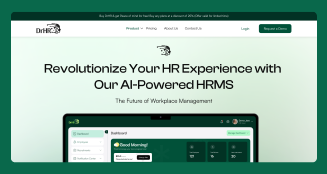
With Stratum 9 InnerView, Biz4Group developed an AI-powered SaaS recruitment platform that simplifies hiring workflows, automates candidate screening, and improves evaluation efficiency through intelligent automation.
Modern recruitment processes often involve handling large applicant volumes, repetitive resume reviews, fragmented interview coordination, and inconsistent candidate evaluation. Stratum 9 InnerView was built to simplify and centralize these operations through a scalable AI-powered hiring ecosystem.
The platform uses AI to automate critical recruitment functions such as job description creation, resume screening, ATS-based candidate scoring, interview management, behavioral analysis, and skill-based evaluation. At the same time, it preserves human oversight in final hiring decisions by helping organizations maintain fairness, transparency, and accountability throughout the recruitment process.
The platform delivers enterprise-grade scalability, accessibility, and performance for modern hiring teams.
Key Capabilities Delivered by Biz4Group
Stratum 9 InnerView demonstrates how Biz4Group combines AI automation with scalable SaaS architecture to modernize complex enterprise workflows.
Designed for athletes and wellness enthusiasts, Dr. Ara is an AI-powered health platform that uses blood test analysis and personalized insights to support smarter performance and wellness decisions.
Athletes often struggle to interpret complex health data and translate it into actionable improvements for performance, recovery, nutrition, and overall fitness. Dr. Ara was created to simplify this process by combining AI-powered health analysis with personalized recommendations and expert consultations in a centralized digital platform.
The application analyzes uploaded blood reports to generate tailored insights related to diet, hydration, sleep quality, recovery, and athletic performance. Users can also schedule private consultations, participate in health-focused event talks, and continuously monitor their wellness progress through the platform.
Dr. Ara helps athletes better understand their bodies while supporting long-term health and performance optimization. It is designed with user-focused experience and intelligent health monitoring capabilities.
Key Capabilities Delivered by Biz4Group
With Dr. Ara, Biz4Group showcased its expertise in building AI-powered healthcare and wellness platforms focused on personalized user experiences and intelligent insights.
The company developed Quantum Fit, an AI-powered personal development application designed to help users improve multiple areas of well-being through personalized goal tracking, habit management, and intelligent progress insights.
Most wellness applications focus on a single area such as fitness, nutrition, or sleep tracking. Quantum Fit was created to provide a more unified and holistic approach by helping users manage six key dimensions of personal growth: physical, mental, spiritual, nutritional, social, and sleep wellness within a single platform.
The app helps users create customized development plans, track habits, monitor progress, and stay engaged through intelligent recommendations and real-time updates by using AI-driven personalization. The platform also includes an interactive AI chatbot, personalized reminders, and a centralized knowledge library to support continuous self-improvement.
Biz4Group designed the platform with a strong focus on usability and accessibility, that ensures users can easily navigate features, monitor progress, and maintain long-term engagement across devices.
Key Capabilities Delivered by Biz4Group
Biz4Group combines strategy, development, and real-world AI expertise to turn ambitious ideas into scalable products.
Start Your AI JourneyChoosing between an AI development agency vs in-house AI team is no longer just a technical decision. It is a strategic choice that directly impacts how efficiently a business can innovate, scale AI initiatives, and adapt to evolving market demands.
For some organizations, outsourced AI development services offer the speed, flexibility, and specialized expertise needed to accelerate AI adoption. For others, building an internal AI team for enterprises becomes the better long-term approach when AI is deeply integrated into core products, operations, and business strategy. Many companies are also adopting hybrid framework that combine internal oversight with external AI expertise for better scalability and execution balance.
Ultimately, the right approach depends on factors such as business goals, AI maturity, operational complexity, and long-term growth plans.
As businesses continue evaluating AI outsourcing vs internal AI team in 2026 and beyond, partnering with the right AI implementation partner becomes critical for long-term success.
With proven experience across healthcare, recruitment, wellness, enterprise automation, and AI-powered SaaS platforms, Biz4Group has helped businesses build scalable and practical AI solutions tailored to real operational challenges. From custom AI applications to dedicated AI engineering support, the company combines technical expertise with business-focused execution to help organizations turn AI investments into measurable business outcomes.
An AI development company is an external technology partner that provides AI expertise, development resources, and implementation support. An in-house AI team is built internally and managed directly by the organization for long-term AI operations and innovation.
For many businesses, outsourced AI development services are more cost-effective in the short term because they reduce hiring, infrastructure, and operational overhead. Internal AI teams often require larger long-term investment but may provide stronger long-term ownership for AI-driven enterprises.
Building an internal AI team for enterprises is often beneficial when AI becomes central to long-term products, proprietary systems, compliance-heavy operations, or organization-wide innovation strategies.
The major benefits include:
The cost varies based on team size, infrastructure, and project complexity. In 2026, experienced AI engineers and ML specialists in the U.S. commonly command six-figure salaries, while businesses must also account for cloud infrastructure, AI tooling, recruitment, and maintenance costs.
A hybrid AI framework combines internal business teams with external AI specialists. Internal teams usually manage business strategy and governance, while external AI partners support development, deployment, and technical execution.
Yes. Many AI development companies specialize in generative AI applications such as AI chatbots, virtual assistants, AI agents, content automation, recommendation systems, and enterprise AI workflows powered by large language models (LLMs).
AI development agencies often deliver faster short-term ROI because businesses can begin implementation immediately without lengthy hiring or infrastructure setup. In-house AI teams may generate stronger long-term ROI when AI becomes a core business capability.
Yes. Many AI development companies work with enterprise clients on large-scale AI initiatives, including automation, generative AI integration, predictive analytics, and operational AI transformation projects.
Industries such as healthcare, finance, logistics, retail, real estate, manufacturing, and eCommerce commonly use outsourced AI development services to accelerate digital transformation and automation initiatives.

with Biz4Group today!
Our website require some cookies to function properly. Read our privacy policy to know more.