Location :
Orlando, FL, USA
Location :
Orlando, FL, USA +1 (407) 714-1616
 info@biz4group.com










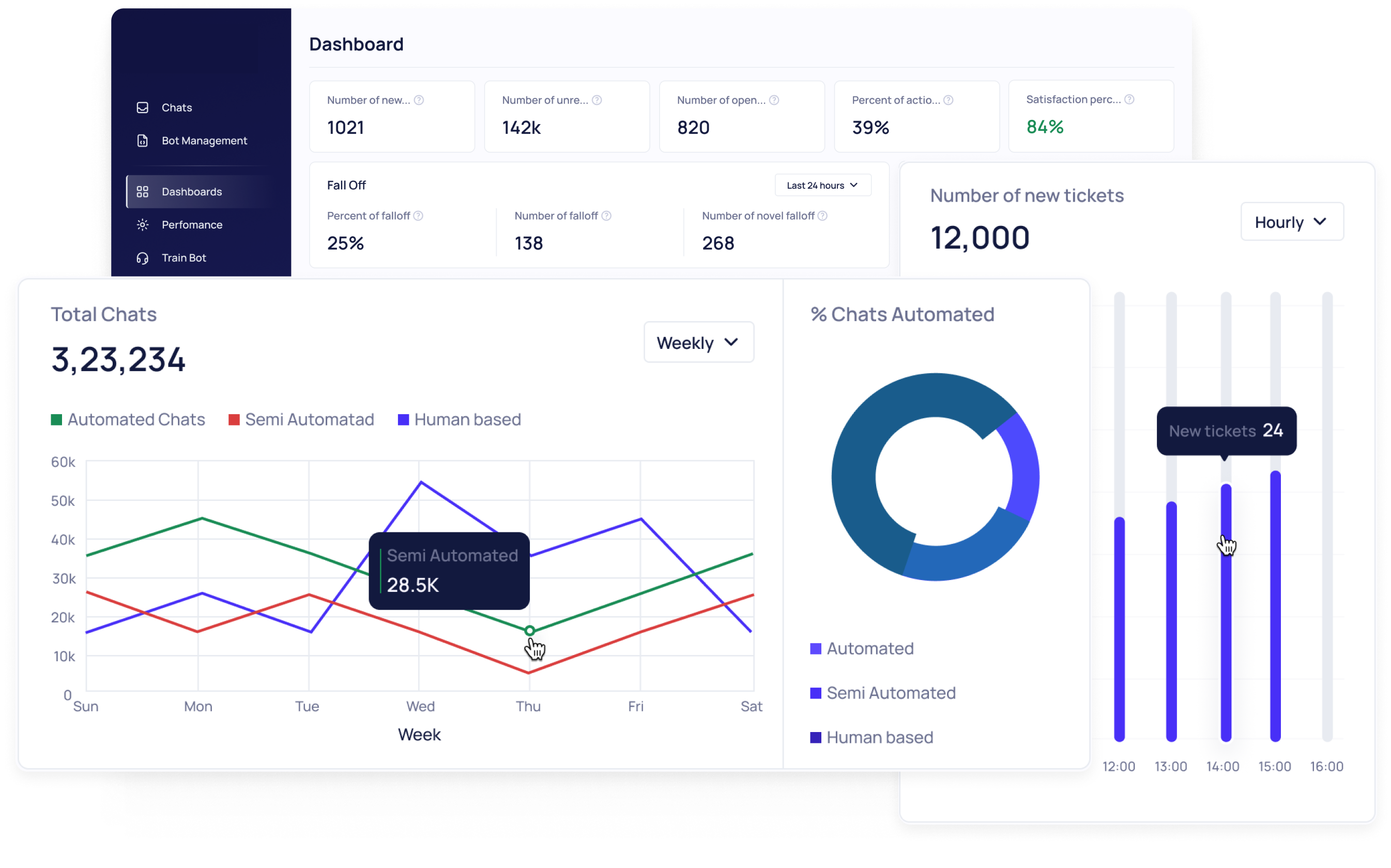







Imagine a digital system that doesn’t wait for instructions but instead, understands your business goals, learns from real-time feedback, and takes independent actions to get the job done.
Read More

Every growing business reaches a point where manual coordination starts slowing real progress. Teams juggle tools, approvals take longer than expected, and routine tasks quietly consume time meant for strategy. This is where AI Workflow Automation Tools begin to make a measurable difference.
In 2026, automation is expected to do far more than connect systems. Businesses now demand workflows that understand context, adapt to changing conditions, and improve with usage. As a result, leaders are actively evaluating the top AI Workflow Automation Tools that can support complex processes without adding operational friction. From handling approvals to orchestrating data movement, these tools are becoming essential for structured growth.
For founders, operations heads, and enterprise decision makers, the focus has shifted to identifying what are the best AI workflow automation tools that align with long term goals. The right solution can reduce errors, increase speed, and streamline AI workflow automation tools for business operations across departments such as finance, HR, IT, and customer support. This is especially critical for organizations managing scale, compliance, and multiple software environments.
This guide is designed for businesses that want practical clarity. If you are evaluating the best AI Workflow Automation Tools, planning how to implement them effectively, or considering AI workflow automation software for large businesses, this blog will help you make confident, informed decisions for 2026 and beyond.
AI-based workflow automation refers to using artificial intelligence to manage, coordinate, and optimize business processes across multiple systems with minimal human involvement. Unlike traditional automation that follows predetermined rules, AI driven workflows can interpret data, understand context, and make decisions dynamically. This allows processes to adapt as conditions change rather than breaking or requiring manual fixes.
A key part of this transition is AI workflow orchestration tools that connect applications, data sources, and decision engines into one intelligent flow. These tools do more than trigger tasks. They determine the right sequence of actions, manage exceptions, and continuously refine the process to improve speed and accuracy. This capability is especially valuable for large companies with complex departments such as finance, HR, supply chain, and IT.
Demand for enterprise AI automation solutions continues to grow rapidly. For example, Gartner forecasts that by 2026, 40 percent of enterprise applications will feature task specific AI agents, a dramatic rise from less than 5 percent today, showing how intelligence is being built directly into workflows and business systems.
As businesses plan for 2026, manual coordination and basic automation struggle to keep pace with rising data volumes, distributed teams, and the need for real-time decisions. AI-based workflow automation helps organizations streamline operations, reduce dependency on manual work, and scale efficiently in a fast-changing environment.

As organizations handle growing workloads, disconnected systems, and rising expectations, automation alone does not solve the problem. What businesses need today are intelligent systems that can adapt, decide, and scale. This is where AI workflow automation for businesses proves its real value and answers a common question many leaders ask: are AI workflow automation tools worth it?
Below are six key benefits that explain why many enterprises now consider them essential.
AI powered workflow automation tools reduce delays caused by manual reviews and handoffs. Instead of waiting for approvals or human intervention, AI analyzes data in real time and triggers the next action automatically. This is critical in workflows involving finance approvals, customer onboarding, IT ticket routing, or compliance checks.
Over time, these systems learn from historical decisions and outcomes, improving accuracy and speed. Businesses benefit from consistent decision making that does not depend on individual availability. Faster decisions translate directly into better customer experiences, shorter cycle times, and more agile operations.
One of the strongest reasons enterprises invest in automation is cost efficiency. Manual workflows require continuous effort, supervision, and error correction. As operations grow, these costs increase quickly. Enterprise AI automation solutions reduce this burden by automating repetitive and logic driven tasks at scale.
AI workflows also identify inefficiencies within existing processes, helping businesses eliminate redundant steps and optimize resource usage. Over time, organizations experience lower rework costs, reduced dependency on manual labor, and better utilization of skilled employees. This makes the ROI of automation clear and measurable.
Human-driven processes often vary due to fatigue, interpretation gaps, or missed steps. Best AI workflow automation tools apply rules, models, and validations consistently across every workflow execution.
AI systems verify inputs, flag anomalies, and ensure compliance requirements are met every time. This is especially important for regulated industries where accuracy and traceability matter. Businesses gain confidence that workflows run correctly without constant monitoring, reducing operational risk and improving reliability.
Traditional growth models require hiring more people to handle increasing volumes. AI workflow automation changes this dynamic. Once workflows are automated, higher transaction volumes can be handled without adding proportional staff.
AI systems scale seamlessly across departments and geographies, making them ideal for enterprises planning expansion or managing seasonal demand spikes. This scalability allows businesses to grow faster while maintaining control over costs and operational complexity.
AI workflow automation provides real-time insights into how business processes perform. Leaders can see where delays occur, which steps consume the most time, and how decisions impact outcomes across the organization.
Advanced platforms go further by offering predictive insights. They highlight potential bottlenecks before they escalate and suggest improvements based on performance data. This level of transparency enables proactive management and continuous optimization rather than reactive fixes.
AI workflow automation for businesses creates a shared operational layer where business teams and IT teams work from the same process definitions and metrics. Workflows are clearly documented, executed consistently, and monitored through shared dashboards.
This alignment reduces miscommunication, speeds up implementation, and ensures automation supports real business objectives rather than isolated technical goals. As a result, organizations achieve smoother collaboration, faster rollout, and better long-term outcomes from automation initiatives.
When implemented strategically, AI powered workflow automation tools deliver speed, accuracy, and scalability, making it clear why enterprises increasingly view them as a core operational investment rather than an optional upgrade.
Implement AI workflow automation tools that actually fit your business processes and scale with growth.
Start Implementation Planning
Choosing the right automation platform can determine whether automation drives growth or creates complexity. With dozens of options in the market, businesses need a clear evaluation framework. The top AI workflow automation tools stand out not just for features, but for how well they align with real operational needs.
Below are the key criteria businesses should use when evaluating AI workflow automation softwares in 2026.
Not all automation tools are truly intelligent. The best platforms go beyond rule-based triggers and offer machine learning driven decision making, contextual understanding, and predictive capabilities.
Key aspects to evaluate:
Strong AI capabilities are essential for businesses seeking intelligent workflow automation tools rather than basic task automation.
Modern workflows span multiple applications, teams, and data sources. Effective tools must orchestrate end-to-end processes rather than automate isolated steps.
What to look for:
This flexibility is critical for enterprise AI workflow automation tools managing complex operations.
Automation delivers real value only when it works seamlessly with current tools. The best platforms integrate easily with CRM systems, ERP platforms, databases, cloud services, and internal applications.
Evaluation points:
Strong integration reduces deployment time and long-term maintenance effort.
Automation needs to change as businesses grow. Tools must support increasing workloads, users, and process complexity without performance issues.
Consider whether the platform offers:
Enterprise readiness separates experimental tools from production grade platforms.
AI driven workflows often handle sensitive business and customer data. Security cannot be an afterthought.
Important criteria include:
This is especially important for regulated industries using enterprise AI workflow automation tools.
Adoption depends on how easily teams can design, monitor, and adjust workflows. Tools should support both business users and technical teams.
Look for:
Ease of use ensures faster adoption and better long-term outcomes.
Cost structures vary widely across platforms. Businesses must evaluate not just upfront pricing but long-term value.
Key pricing considerations:
Transparent pricing helps avoid unexpected expenses as usage grows.
By evaluating these criteria carefully, businesses can confidently select top AI workflow automation tools that deliver intelligence, scalability, and measurable value across enterprise operations.
Struggling to connect AI workflows with existing systems? Get a clear integration roadmap built for enterprise environments.
Plan My AI IntegrationAutomation in 2026 is not about speed alone. Businesses are under pressure to run leaner operations, respond faster to change, and coordinate work across an expanding stack of software tools. That is why companies are investing in AI powered workflow automation tools that bring intelligence into everyday business operations.
The platforms below stand out because they help organizations automate decisions, not just tasks, making them some of the best AI workflow automation tools for modern enterprises.

UiPath is an enterprise focused platform that blends robotic process automation with AI driven intelligence to automate complex, multi-step workflows. It enables businesses to automate structured and unstructured processes while continuously improving outcomes through learning models. UiPath is best suited for large organizations that need high volume automation across finance, HR, operations, and IT while maintaining strong governance and control.
Pros and Limitations
Pros
Limitation

Automation Anywhere focuses on cloud native intelligent automation with strong cognitive capabilities. The platform allows businesses to automate workflows that involve decision making, pattern recognition, and unstructured data. It is ideal for enterprises looking to move beyond basic automation and adopt AI driven workflows across compliance, finance, and customer operations.
Pros and Limitations
Pros

Microsoft Power Automate enables organizations to build AI enhanced workflows tightly integrated with the Microsoft ecosystem. Using AI Builder and Azure AI services, businesses can automate approvals, data processing, and decision-based workflows with minimal effort. It works best for companies already using Microsoft 365, Dynamics, or Azure.
Pros and Limitations
Pros
Limitation

Zapier is designed for fast and flexible automation across thousands of SaaS tools. While traditionally known for simple automations, Zapier has evolved to include AI assisted actions that help teams automate decisions and data routing. It is best for small to mid-sized businesses that need quick deployment without heavy technical effort.
Pros and Limitations
Pros
Limitation

Workato is an enterprise grade platform built for intelligent workflow automation and system integration. It enables businesses to orchestrate workflows across applications using AI driven logic and governance controls. Workato is well suited for large organizations managing complex integrations between ERP, CRM, and internal systems.
Pros and Limitations
Pros
Limitation

Make is a visual AI automation workflow platform designed to help businesses build, monitor, and scale complex workflows without heavy engineering effort. Unlike traditional automation tools that focus on linear task execution, Make enables logic driven orchestration across applications with support for conditional flows, data transformation, and intelligent triggers. It is ideal for teams that need flexible automation across SaaS tools, internal systems, and data pipelines while maintaining full visibility and control over workflow behavior.
Pros
Limitation

ServiceNow provides AI powered workflow automation focused on service management and enterprise operations. It helps organizations automate customer service, HR, and IT workflows using predictive intelligence and virtual agents. ServiceNow works best for large enterprises with structured service processes.
Pros and Limitations
Pros
Limitation

Appian combines low code development with AI driven workflow automation to help businesses build custom enterprise workflows quickly. It enables organizations to design, deploy, and manage intelligent processes without heavy development cycles. Appian is ideal for enterprises that need flexibility with control.
Pros and Limitations
Pros
Limitation
These are the leading platforms shaping how intelligent automation is applied in real business environments, and in the next section, we compare them side by side to help you quickly identify which solution best fits your operational needs.
With so many platforms offering automation and AI capabilities, a side-by-side comparison helps cut through the noise. The table below highlights how the top AI workflow automation tools differ in focus, intelligence, and business fit.
|
Tool |
Best For |
Core AI Strength |
Integration Depth |
Pricing Model |
Ideal Business Size |
|---|---|---|---|---|---|
|
UiPath |
Enterprise scale automation |
ML driven decisions, document intelligence |
Very high across ERP, CRM, legacy systems |
Enterprise subscription, custom pricing |
Large enterprises |
|
Automation Anywhere |
Cognitive process automation |
AI bots, NLP, anomaly detection |
High |
Subscription with AI add ons |
Mid to large enterprises |
|
Microsoft Power Automate |
Microsoft ecosystem users |
AI Builder, Azure AI services |
High within Microsoft stack |
Per user or per flow pricing |
SMB to large enterprises |
|
Zapier |
Quick SaaS automation |
AI assisted triggers and routing |
Very high for SaaS apps |
Free to enterprise tiers |
Startups and SMBs |
|
Workato |
Complex system orchestration |
AI driven workflow logic, governance |
Very high |
Custom enterprise pricing |
Large enterprises |
|
Peltarion |
AI model driven workflows |
Model orchestration, predictive AI |
Custom integrations |
Subscription based |
AI focused teams, enterprises |
|
ServiceNow |
IT, HR, service operations |
Predictive routing, virtual agents |
Very high |
Module based enterprise pricing |
Large enterprises |
|
Appian |
Custom enterprise workflows |
AI decision rules, process intelligence |
High |
Subscription based |
Mid to large enterprises |
This comparison makes it easier to see how each platform aligns with different automation goals, and in the next section, we focus on how to choose the right tool based on your specific business needs.
Choosing the best AI workflow automation tools is only step one. Implementation decides the outcome.
Talk to an Automation Expert
Selecting the right automation platform can directly impact how well your processes scale and perform over time. With many options available, businesses must evaluate tools based on practical fit rather than feature lists alone. Choosing among the best AI workflow automation tools requires aligning technology with real operational needs and long-term goals.
Below are the key factors that should guide this decision.
Company size plays a major role in determining which AI workflow automation for businesses will deliver value. Small and mid-sized organizations often benefit from tools that are quick to deploy, easy to manage, and require minimal technical overhead. These teams typically focus on automating repetitive tasks and improving coordination without heavy customization.
Large enterprises, on the other hand, require enterprise AI automation solutions that support complex governance, role-based access, and high transaction volumes. Scalability, security, and system reliability become critical as more teams and departments rely on automation daily. Choosing a platform aligned with an organizational scale prevents costly migrations later.
Not all workflows are created equal. Simple processes may only require basic triggers and conditional logic, while complex operations involve multiple systems, approvals, and decision layers. Businesses with straightforward workflows can rely on lighter AI powered workflow automation tools that focus on speed and simplicity.
Organizations managing cross department processes should prioritize platforms capable of intelligent orchestration. These tools handle exceptions, parallel tasks, and adaptive decision making without breaking the flow. Matching the tool’s capabilities to workflow complexity ensures automation remains reliable as processes evolve.
Budget considerations go beyond subscription costs. Businesses should evaluate the total cost of ownership, including implementation, customization, and long-term maintenance. The top AI workflow automation tools clearly demonstrate ROI through reduced manual effort, faster cycle times, and fewer errors.
Organizations should also assess how quickly automation can deliver measurable benefits. Some platforms provide faster short-term gains, while others support deeper long-term optimization. Aligning investment with realistic ROI expectations helps justify automation initiatives at both operational and leadership levels.
Internal technical readiness strongly influences automation success. Teams with limited technical expertise may benefit from low code or no code intelligent workflow automation tools that enable business users to design and manage workflows independently.
More mature organizations with dedicated IT or data teams can leverage advanced platforms offering deep customization, AI model integration, and system level orchestration. Selecting a tool that matches internal capabilities reduces friction, speeds adoption, and maximizes long term value.
By evaluating company size, workflow complexity, budget expectations, and technical maturity, businesses can confidently choose AI workflow automation tools that support sustainable growth and operational excellence.

While AI workflow automation tools deliver strong long-term value, adoption often comes with practical roadblocks. Many organizations struggle not because of the technology itself, but due to gaps in preparation, alignment, and execution. Identifying these challenges early makes automation initiatives far more successful.
Below are the most common challenges businesses face, along with clear solutions.
AI driven workflows depend heavily on accurate and consistent data. Many businesses operate with fragmented data spread across systems, formats, and departments. Poor data quality leads to unreliable automation outcomes and weak decision making.
Solution:
Establish data standards, improve data governance, and start automation with processes that already have structured data. Gradual expansion helps build trust in AI-powered workflows.
Legacy software and disconnected tools often slow down automation efforts. Without proper planning, integrating new workflows into existing environments can become time-consuming and costly.
Solution:
Prioritize platforms with strong API support and modular design. Working with an experienced AI development Company can also simplify system alignment and reduce long term technical debt.
Employees may hesitate to adopt automated workflows due to fear of job impact or loss of control. Without user acceptance, automation tools often remain underutilized.
Solution:
Communicate clearly that automation supports teams rather than replaces them. Training, transparency, and early involvement help build confidence and adoption across departments.
Many organizations automate tasks in isolation without linking them to broader business goals. This leads to fragmented workflows and limited ROI.
Solution:
Define clear objectives tied to outcomes like cost reduction, speed, or accuracy. A phased roadmap ensures automation scales in a structured and measurable way.
AI-based automation requires skills in data handling, system orchestration, and ongoing optimization. Internal teams may lack the experience of managing advanced workflows independently.
Solution:
Upskilling internal teams and planning proper AI integration from the start helps avoid bottlenecks. Low code tools can also reduce dependency on specialized expertise.
By addressing these challenges with the right strategy, support, and planning, businesses can adopt AI workflow automation tools with confidence and unlock their full operational potential.

As businesses mature in their automation journey, the focus is shifting from task execution to intelligent autonomy. Beyond 2026, automation will rely more on systems that can reason, adapt, and coordinate work independently.
These emerging trends are shaping how AI workflow automation tools will evolve in the coming years.
Agent-based workflows introduce autonomous AI agents that handle specific responsibilities within a larger process. Instead of a single linear workflow, multiple agents collaborate, monitor conditions, and take actions based on their assigned roles. Each agent can observe data, make decisions, and interact with other agents or systems.
This approach is gaining traction as organizations look for modular and resilient automation architectures. It also explains the growing demand for an AI agent development company that can design and deploy role specific agents tailored to business operations. These workflows improve flexibility and make automation easier to scale across departments.
Also Read: Agentic AI vs AI Agents: Insights Every Enterprise Leader Should Know
Future automation systems will move beyond rule driven logic toward fully autonomous decision making. AI models will evaluate context, risk, and outcomes in real time, allowing workflows to act without human approvals in many scenarios.
This evolution reduces delays and enables faster responses in areas like fraud detection, supply chain adjustments, and service routing. As agentic AI development matures, workflows will continuously learn from outcomes and refine decisions, making automation smarter with each execution.
Businesses operate across dozens of applications, cloud platforms, and internal systems. Future automation will focus heavily on orchestrating workflows seamlessly across this fragmented ecosystem.
Instead of siloed automations, workflows will span multiple platforms, vendors, and environments while maintaining consistency and visibility. This capability will define the best AI workflow automation software, especially for enterprises managing complex digital infrastructures.
Automation will become increasingly proactive rather than reactive. Using predictive analytics software, AI-driven workflows will anticipate delays, resource constraints, and potential failures before they occur.
By analyzing historical and real time data, workflows will automatically adjust execution paths, allocate resources, and prevent bottlenecks. This shift toward predictive optimization is a key driver behind emerging AI workflow automation tools trends, helping businesses improve efficiency without constant monitoring.
Together, these trends signal a future where intelligent, autonomous, and predictive systems redefine how businesses design and scale workflow automation beyond 2026.
Standard automation platforms work well for common processes, but they are not designed for every business scenario. When workflows become highly specialized or tightly linked to business strategy, a custom approach offers far greater control and long term value. Below is a clearer way to identify when custom AI workflow automation makes more sense.
Situations Where Custom Automation Is the Better Choice
If your workflows span multiple departments, geographies, or decision layers, prebuilt tools often struggle to adapt. Custom solutions allow workflows to respond dynamically to context, priorities, and changing conditions without rigid limitations.
Businesses in regulated sectors such as healthcare, finance, or insurance often need automation that follows strict compliance rules. Custom workflows make it easier to embed regulatory logic, audit trails, and data governance directly into the process.
Many enterprises rely on internal platforms or legacy systems that lack standard connectors. Custom automation enables seamless integration without relying on fragile workarounds or manual intervention.
When workflows depend on proprietary models, advanced predictions, or domain specific intelligence, off the shelf tools may limit flexibility. Custom solutions allow AI models to directly influence decisions, execution paths, and outcomes.
Organizations aiming for sustained growth or competitive advantage often outgrow standard tools. Custom automation adapts to evolving business strategies rather than forcing processes to fit predefined templates.
When business processes demand flexibility, deep intelligence, and tight system alignment, custom AI workflow automation tools provides a foundation built around how the organization truly operates.
Implementing AI workflow automation tools at an enterprise level is not just a technology exercise. It involves data security, compliance, system interoperability, and long-term operational stability. Many automation initiatives fail because tools are deployed without a clear understanding of enterprise workflows and risk boundaries. Biz4Group addresses this gap by approaching automation as a business system, not a feature rollout.
As an experienced AI Automation Company, Biz4Group focuses on building workflow automation solutions that operate reliably in regulated and data sensitive environments. The team works closely with stakeholders to map real operational workflows, identify automation leverage points, and implement intelligence where it delivers measurable impact. This ensures automation supports business outcomes rather than creating disconnected processes.

A strong demonstration of this capability is Biz4Group’s enterprise project titled AI for Enterprise with Privacy Focused Data Hosting and Processing. The solution delivers a HIPAA and GDPR compliant AI agent designed to automate customer support, retrieve legal information, provide personalized recommendations, streamline HR inquiries, support multilingual interactions, and securely process sensitive data across industries.
This project reflects Biz4Group’s strength in delivering enterprise AI solutions that balance automation, intelligence, and governance. From secure data hosting and access controls to workflow orchestration and system integration, every layer is designed for enterprise scale and compliance.
Rather than forcing businesses to adapt to rigid platforms, Biz4Group builds automation frameworks that adapt to how organizations actually operate, making intelligent workflow automation sustainable over the long term.
Biz4Group enables enterprises to implement AI-driven workflow automation with clarity, control, and confidence, ensuring automation becomes a strategic asset rather than an operational risk.
Design, integrate, and optimize intelligent workflow automation with security, compliance, and performance in focus.
Book an Implementation CallAI workflow automation tools are reshaping how businesses operate, scale, and compete in 2026. What started as basic task automation has evolved into intelligent systems capable of making decisions, orchestrating complex workflows, and continuously improving performance. For modern organizations, adopting the best AI workflow automation tools is no longer about efficiency alone, but about building resilience, speed, and long-term operational control.
As explored throughout this guide, the right approach depends on business size, workflow complexity, and internal maturity. While off the shelf platforms offer quick wins, enterprises with advanced requirements often benefit from intelligent workflow automation built around their unique processes. The key lies in choosing solutions that align with real business goals rather than short term convenience.
With the right strategy and implementation partner, AI driven automation becomes a growth enabler rather than a technical experiment.
Ready to plan your automation roadmap? Book an appointment with our experts to discuss how AI workflow automation can be tailored to your business.
Implementation timelines vary based on workflow complexity and system readiness. Simple automation can go live in a few weeks, while enterprise grade AI workflow automation tools may take several months to design, integrate, test, and optimize fully.
Yes, many AI workflow automation softwares support legacy environments through connectors, middleware, or custom integration layers. In complex cases, a hybrid approach is used where AI orchestrates workflows while legacy systems continue handling core operations.
Success is usually measured through reduced process cycle time, lower operational costs, fewer manual errors, improved compliance, and faster decision making. Mature organizations also track long term ROI through scalability and workforce productivity gains.
Modern platforms increasingly support low code and no code interfaces, allowing business users to design and manage workflows. However, advanced automation involving AI models and orchestration still benefits technical oversight for stability and security.
Most enterprise AI workflow automation tools include monitoring, audit logs, and fallback mechanisms. These allow businesses to review decisions, adjust models, and introduce human approvals where needed to maintain control and trust.
AI workflow automation is primarily designed to eliminate repetitive and low value tasks, not replace teams. In most cases, it enables employees to focus on strategic, analytical, and customer-facing work rather than manual coordination.

with Biz4Group today!
Our website require some cookies to function properly. Read our privacy policy to know more.